by Tyler M | Mar 13, 2026 | Post Labor Economics, AI
by Tyler M | Mar 10, 2026 | Post Labor Economics, AI
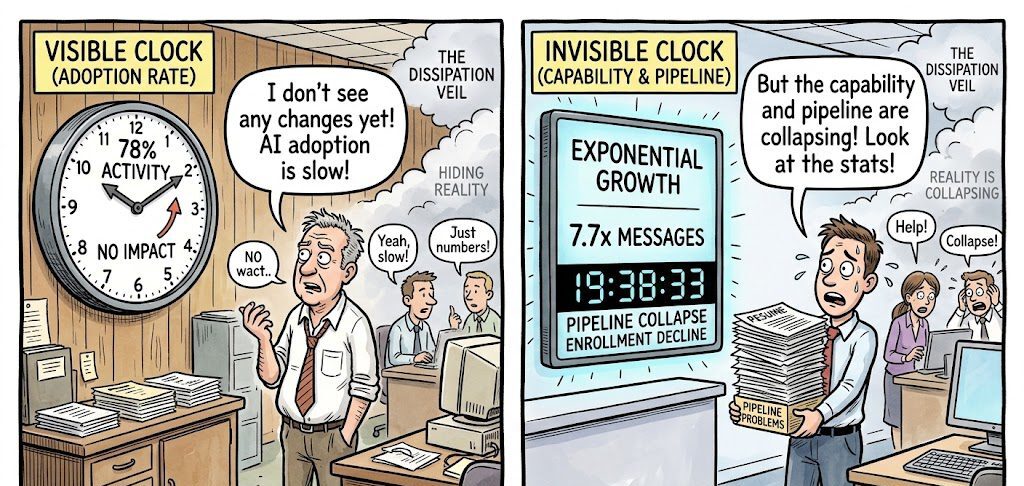
Research compiled from NBER, McKinsey, EY, KPMG, BCG, OpenAI, CRA, Bloomberg, BLS, Lawfare, and Carnegie Endowment primary sources How the Capability Gap Makes the Ratchet Invisible On February 22, 2026, a fictional recession crashed real markets. Citrini...
by Tyler M | Mar 6, 2026 | Post Labor Economics, AI
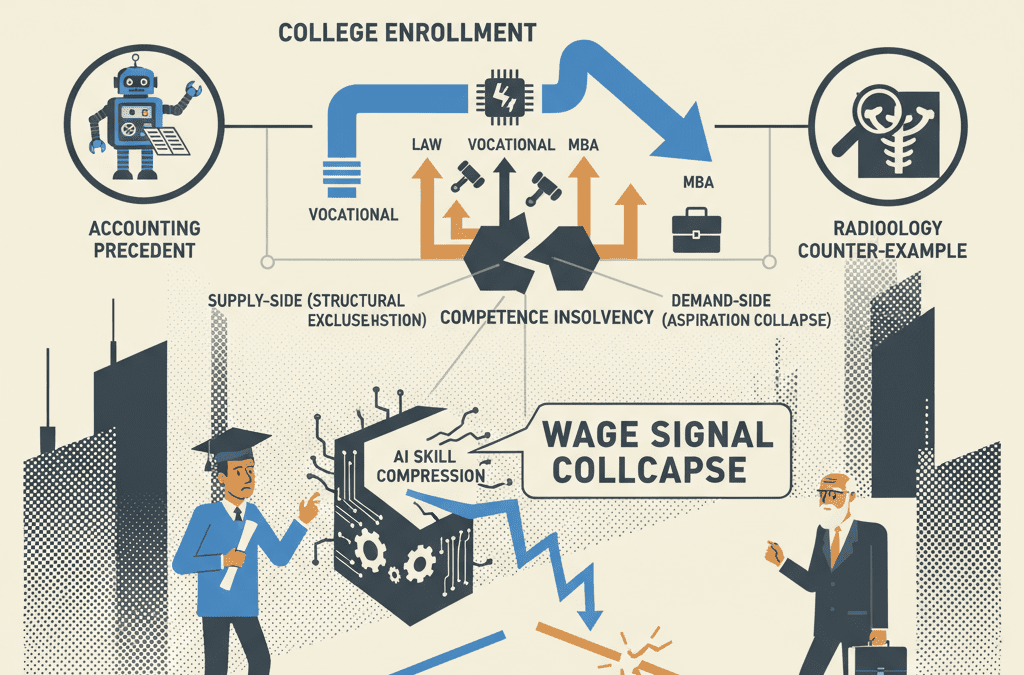
Bottom Line AI does not need to eliminate jobs to break the labor market. It needs to compress the wage premium for expertise — the gap between what a second-year worker earns and what a fifteenth-year veteran earns — enough that prospective entrants rationally decide...
by Tyler M | Mar 3, 2026 | Post Labor Economics, AI
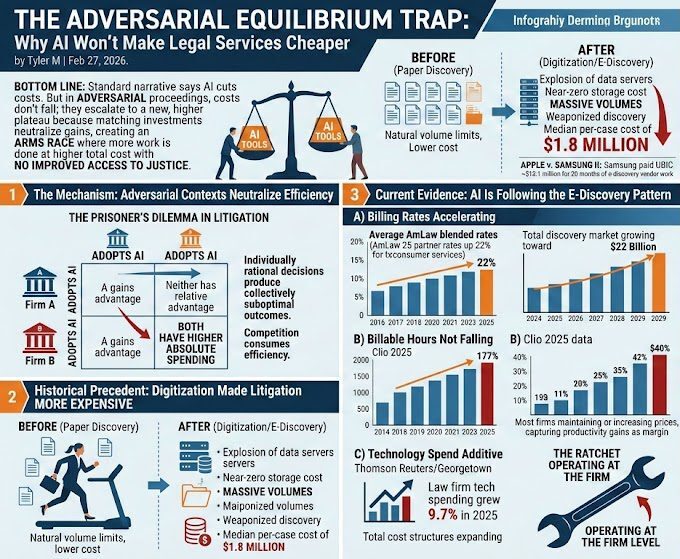
by Tyler M | Feb 27, 2026 | Post Labor Economics, AI Bottom Line When both sides of an adversarial proceeding adopt AI, costs do not fall to a new, lower equilibrium. They escalate to a new, higher plateau. Legal services offer the cleanest empirical demonstration of...