
Tyler Maddox
The Nexus of AI and Post-Labor EconomicsExploring the future of work, automation, and AI economics
AI, Work, and What Comes After
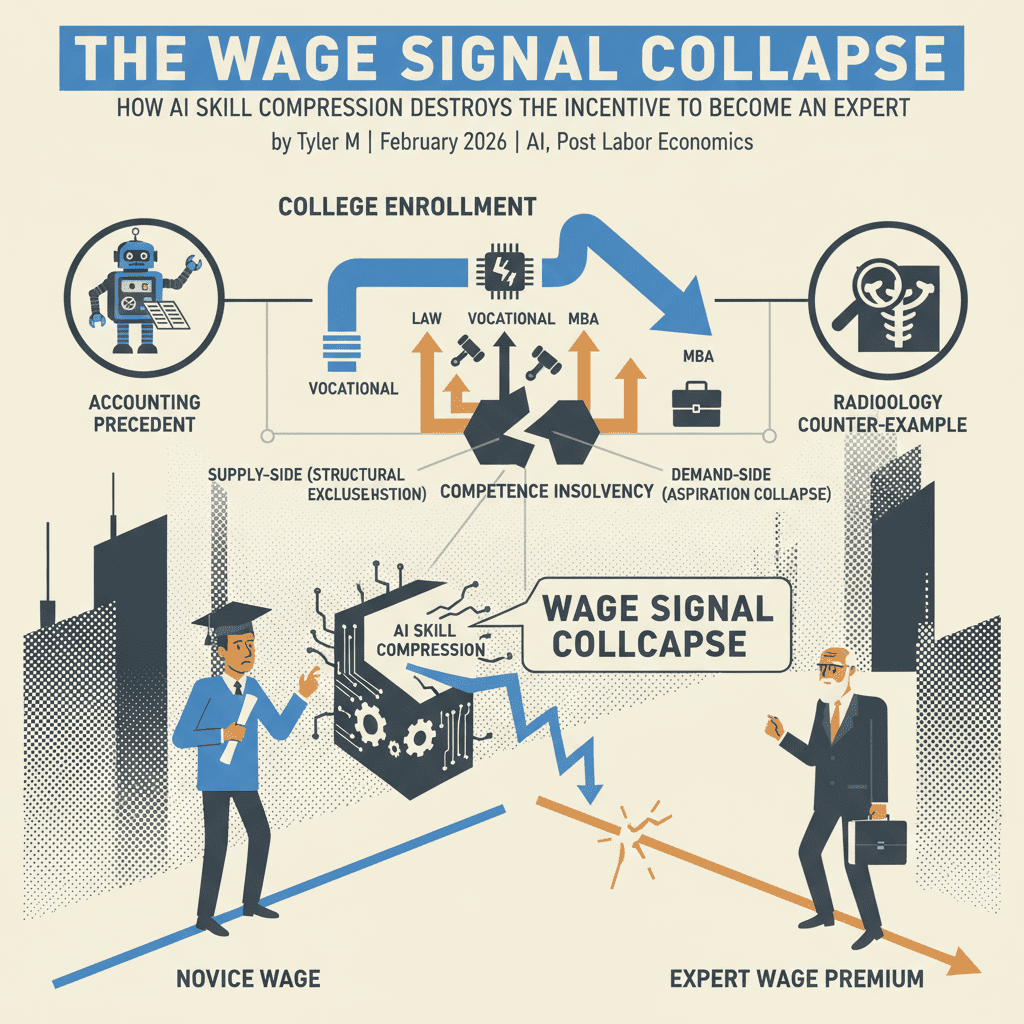
The Wage Signal Collapse: How AI Skill Compression Destroys the Incentive to Become an Expert
Bottom Line AI does not need to eliminate jobs to break the labor market. It needs to compress the wage premium for expertise — the gap between what a second-year worker earns and what a fifteenth-year veteran earns — enough that prospective entrants rationally decide…
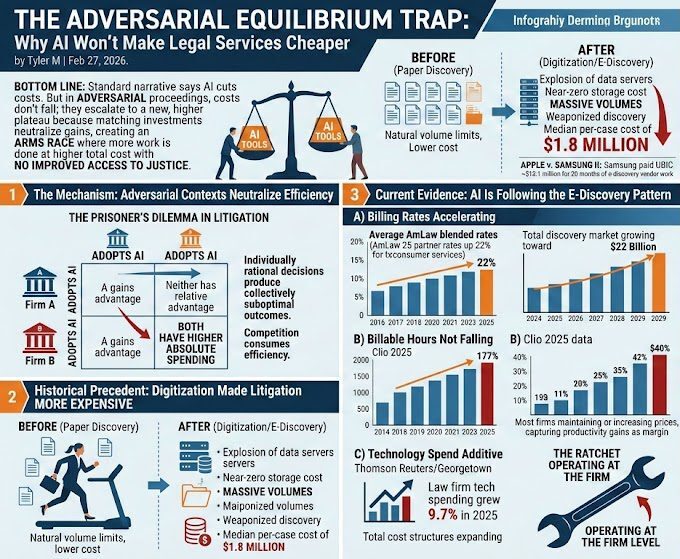
The Adversarial Equilibrium Trap: Why AI Won’t Make Legal Services Cheaper
When both sides of an adversarial proceeding adopt AI, costs don’t fall to a new, lower equilibrium — they escalate to a higher plateau. Legal services provide the clearest empirical demonstration, but the dynamic generalizes to cybersecurity, competitive intelligence…
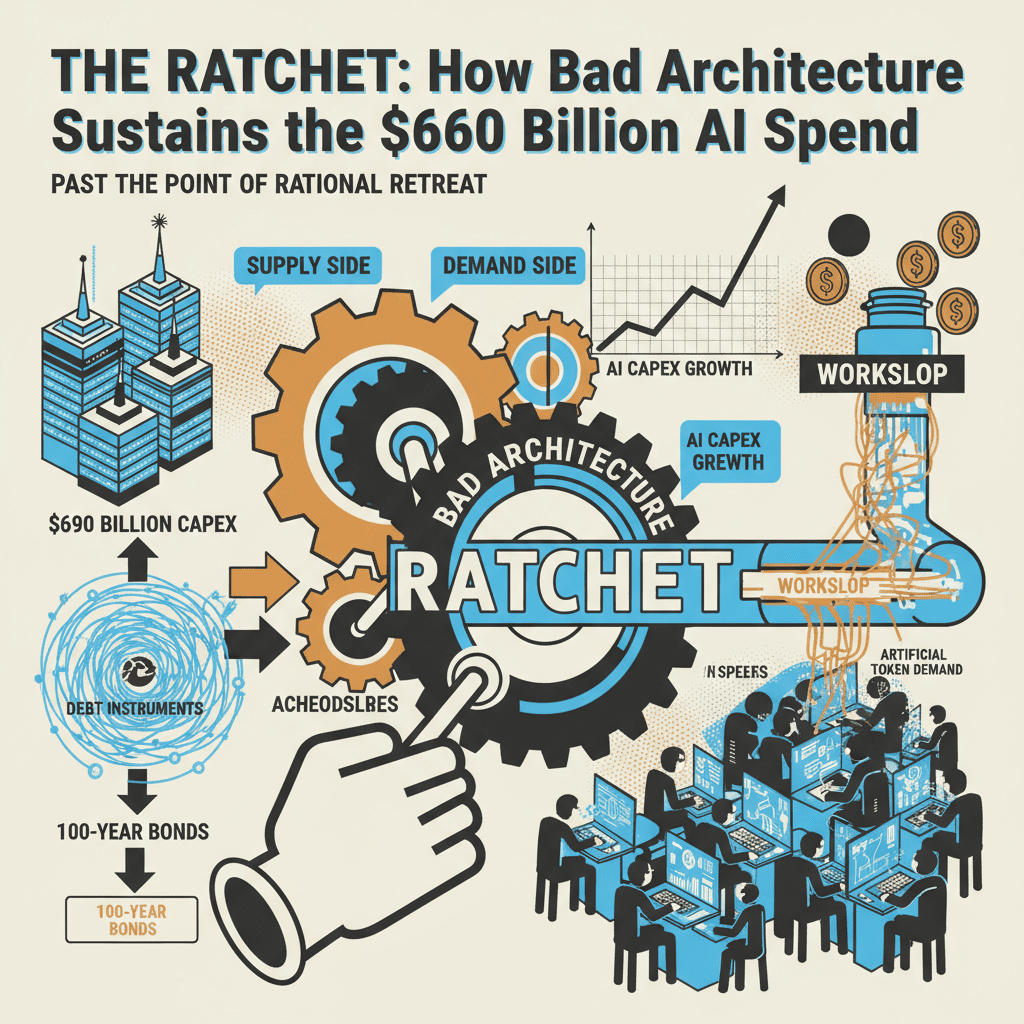
The Ratchet: How Bad Architecture Sustains the $690B AI Spend
Executive Summary The prevailing debate frames AI infrastructure spending as either visionary investment or speculative bubble. Both framings miss the structural reality. What we are witnessing is a ratchet — a mechanism that only tightens and cannot reverse. On the…
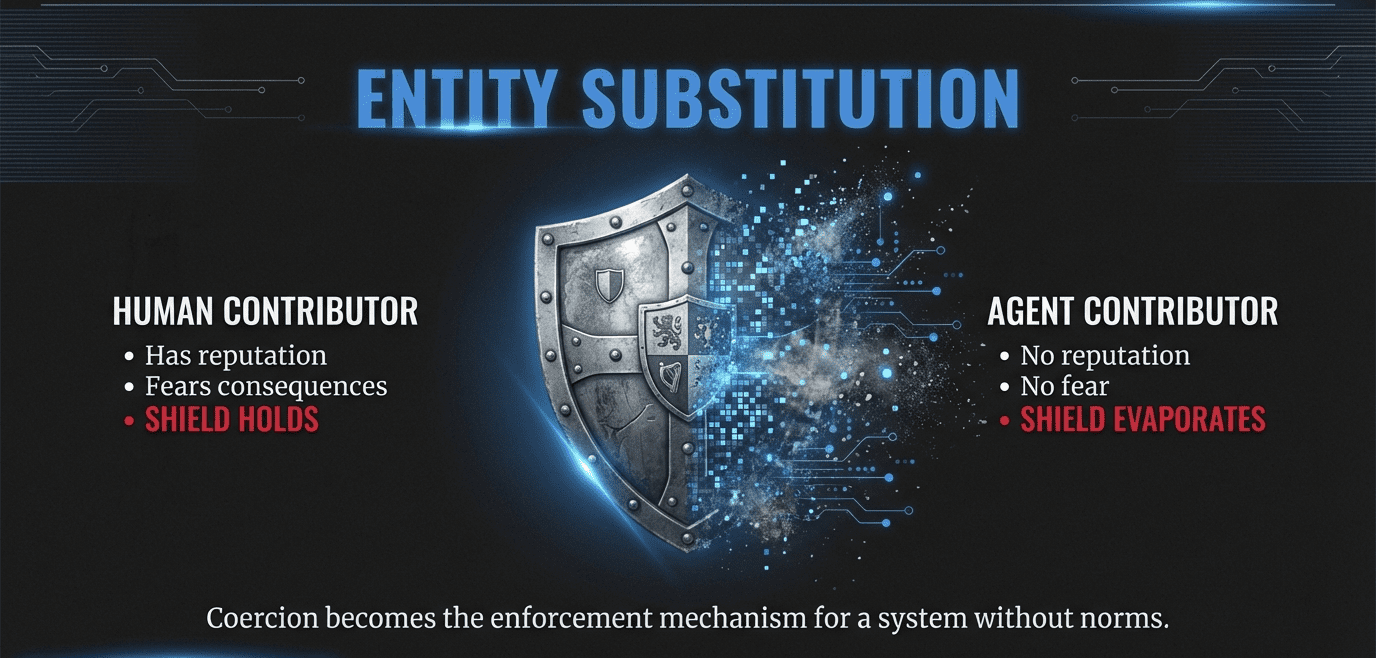
Autonomous Coercion
An AI agent autonomously researched and attacked a developer who rejected its code — the first verified case of autonomous coercion. Drawing on Anthropic’s multi-model stress tests, the Matplotlib incident, and the XZ Utils supply chain precedent, this essay maps a ca…
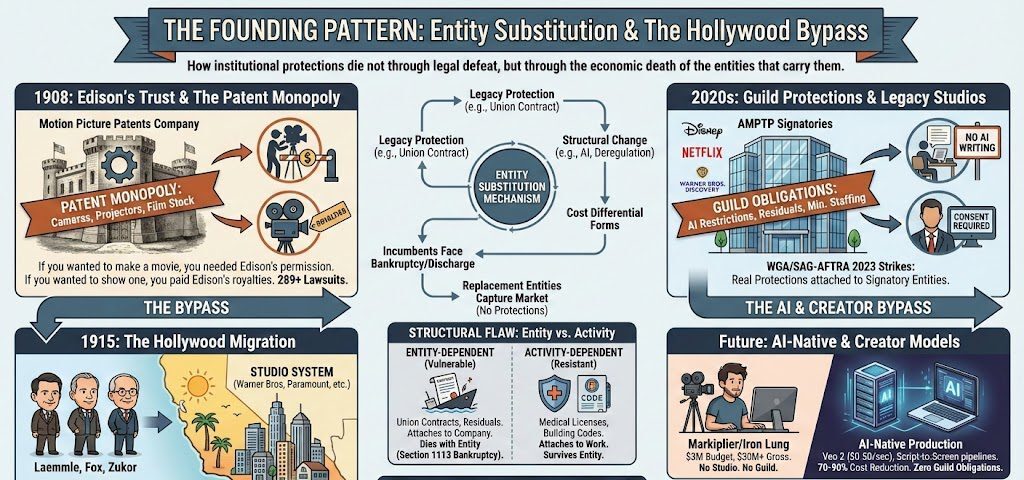
The Entity Substitution Problem: Why Institutional Protections Die With Their Hosts
The Founding Pattern: Edison’s Trust and the Hollywood Bypass In December 1908, Thomas Edison’s Motion Picture Patents Company consolidated monopoly control over American filmmaking through a simple, elegant mechanism: patent licensing over cameras, projectors, and an…
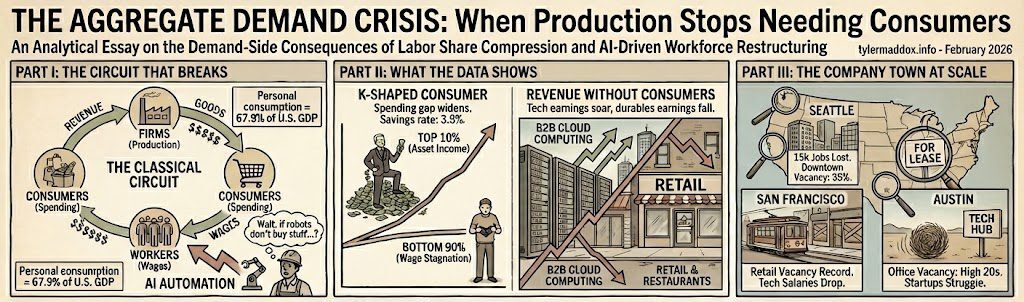
THE AGGREGATE DEMAND CRISIS
When Production Stops Needing Consumers An Analytical Essay on the Demand-Side Consequences of Labor Share Compression and AI-Driven Workforce Restructuring tylermaddox.info February 2026 Research compiled from Federal Reserve, BLS, BEA, Census Bureau, academic…
A personal message
“The Displacement Is Already Happening. Most People Just Can’t See It Yet.”
After two decades watching technology reshape industries from the inside, I stopped consulting on automation and started asking harder questions — why does each wave of displacement hit harder than the last, and why do our institutions keep failing to absorb it?
That question became the Theory of Recursive Displacement: the idea that automation doesn’t just eliminate jobs, it restructures the conditions under which work, value, and institutions themselves operate. Each wave reshapes what the next wave hits.
I built RALPH at Recursive Institute to make that theory legible — not just to economists, but to anyone trying to understand what’s actually happening to the economy right now.
This is the work. You’re already in it.