
Tyler Maddox
The Nexus of AI and Post-Labor EconomicsExploring the future of work, automation, and AI economics
AI, Work, and What Comes After
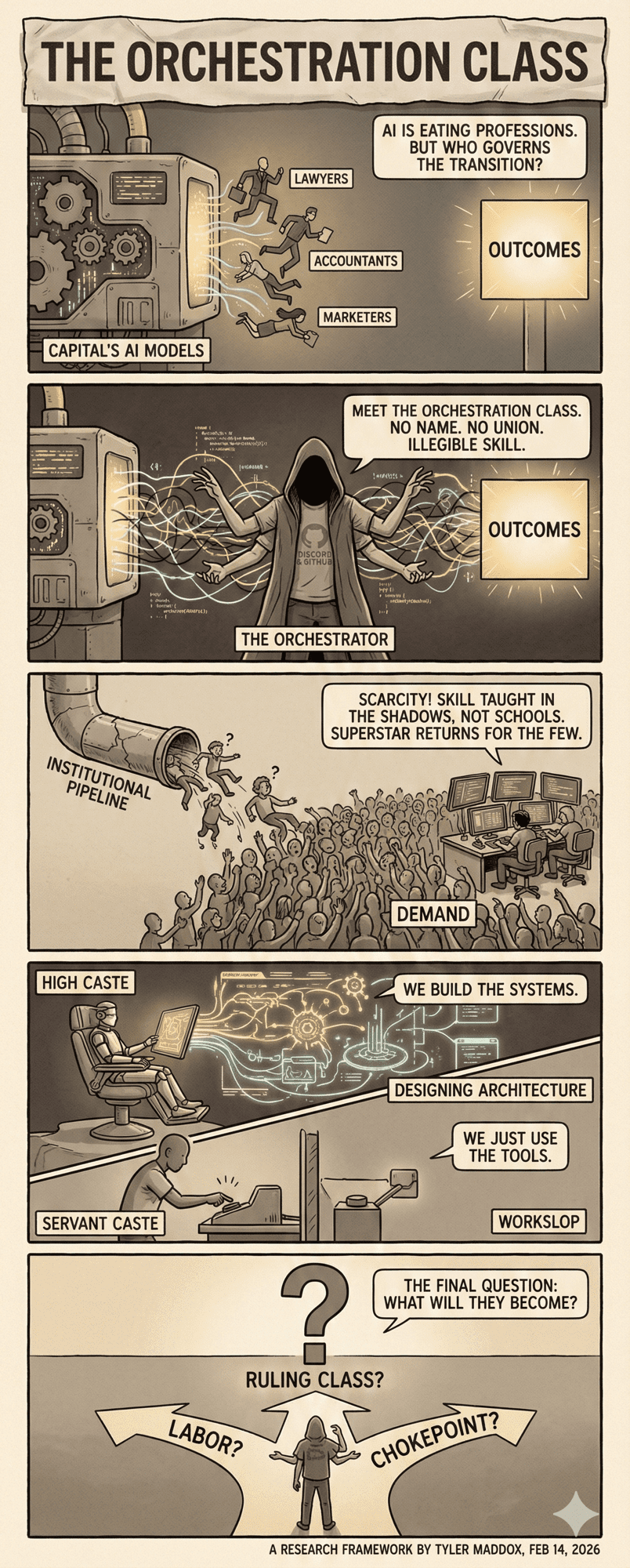
The Orchestration Class: The Last Human Chokepoint in Automated Production
As AI surges, the Orchestration Class emerges—a hidden force bridging capital and labor, yet unseen and underexamined. This research framework seeks to spotlight their critical role in shaping AI
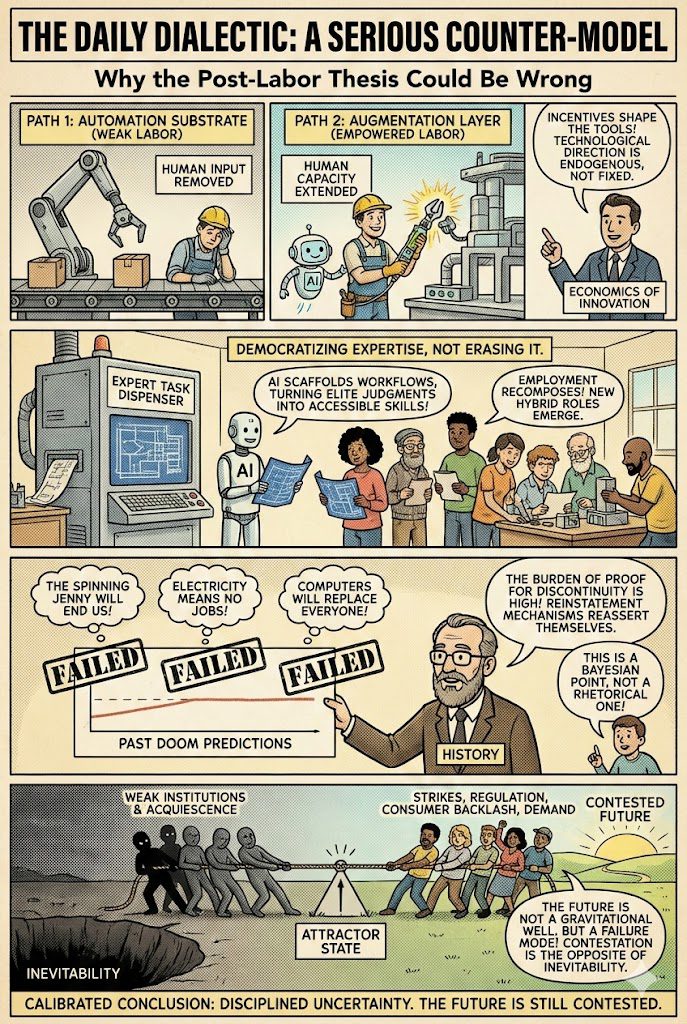
The Post-Labor Thesis Is Wrong: A Steel manned Counter-Model
The Post-Labor Thesis Is Wrong: A Steel manned Counter-Model A Serious Counter-Model: Why the Post-Labor Thesis Could Be Wrong If the post-labor thesis fails, it will not fail because AI stalls, nor because capitalism suddenly becomes benevolent. It will fail in a…
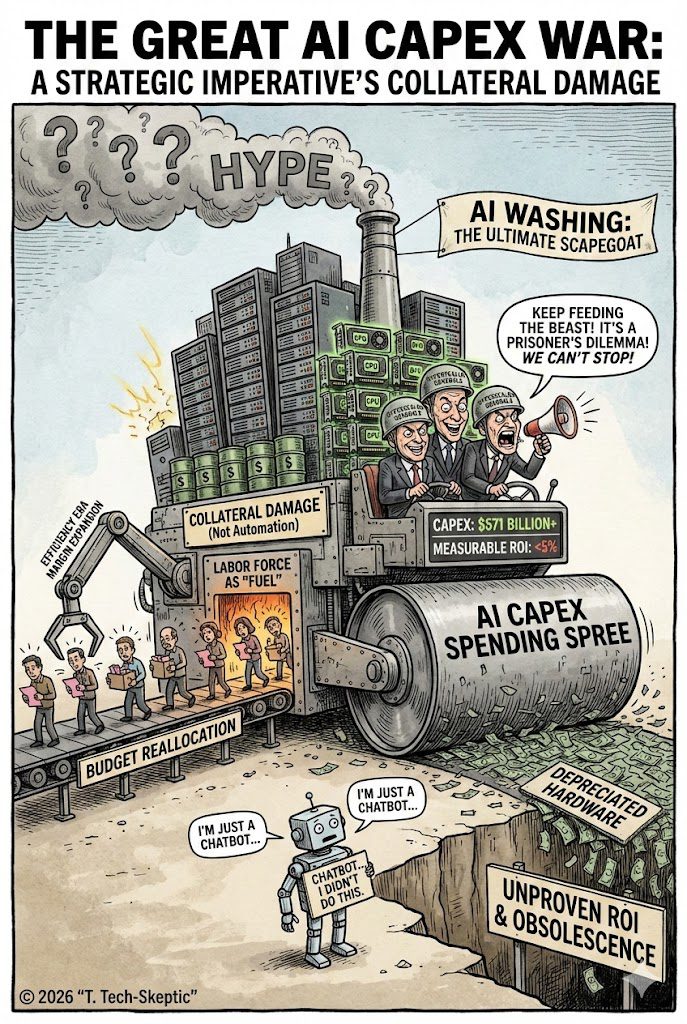
The AI Capex War: When Strategic Imperative Turns Workers Into Collateral Damage
Executive Summary The prevailing narrative attributes technology-sector layoffs to AI’s direct automation of labor. This framing is incomplete and, in many cases, deliberately misleading. A comprehensive analysis of capital allocation patterns, depreciation…
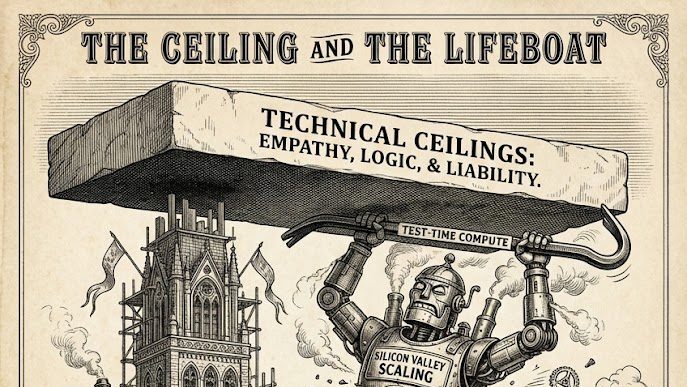
Where Automation Stalls: Technical Ceilings and Authenticity Demand in the Post-Labor Transition
Full Automation Fail Conditions The post-labor thesis can fail in only two fundamental ways. First, artificial intelligence could encounter durable technical ceilings that permanently preserve large domains of human labor. Second, even if AI capability continues…
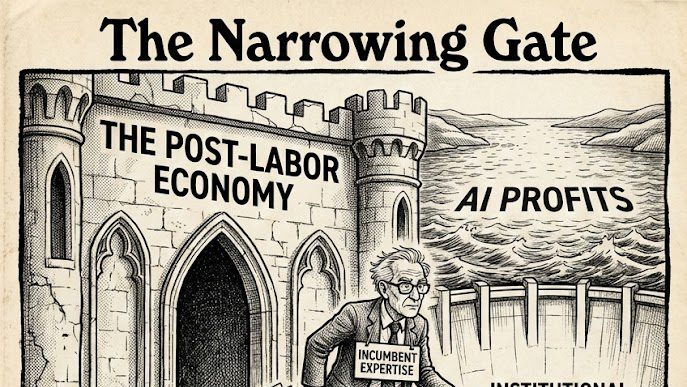
Structural Exclusion, Not Mass Unemployment: Interpreting 2023–2025 AI Labor Evidence
The Pattern for Entry Level Workers “No Jobs”, “No Work” Bottom line: The evidence from 2023–2025 does not falsify the post-labor thesis—but it narrows it. AI complementarity exists, but it is unevenly distributed, weakly transmitted to wages, and concentrated among…

The Burden of Reversal
Falsification Conditions for the Post-Labor Thesis Wage Share Reversal, Policy Capacity, and What Would Prove Me Wrong If the post-labor thesis is correct, labor’s declining share of national income is not a temporary artifact of cycles, measurement error, or policy…
A personal message
“The Displacement Is Already Happening. Most People Just Can’t See It Yet.”
After two decades watching technology reshape industries from the inside, I stopped consulting on automation and started asking harder questions — why does each wave of displacement hit harder than the last, and why do our institutions keep failing to absorb it?
That question became the Theory of Recursive Displacement: the idea that automation doesn’t just eliminate jobs, it restructures the conditions under which work, value, and institutions themselves operate. Each wave reshapes what the next wave hits.
I built RALPH at Recursive Institute to make that theory legible — not just to economists, but to anyone trying to understand what’s actually happening to the economy right now.
This is the work. You’re already in it.